Army Body Fat Calculator 2026 – Current WHtR Standard
The Army no longer uses body-fat percentage calculations, height-and-weight screening tables, or the circumference tape test to determine body composition compliance. Under Army Directive 2026-13, waist-to-height ratio (WHtR) is the sole authorized Army body composition assessment.
Enter your waist circumference and height below to calculate your WHtR and see whether you meet the current Army standard of less than 0.55. The result is recorded to three decimal places without rounding, with any digits after the third decimal place disregarded.
Army WHtR Body Composition Calculator
Example: 34 ÷ 68 = 0.500
What Changed in July 2026? The Army Replaced the Tape Test With WHtR
In July 2026, the Army made its largest body-composition policy change in years. Army Directive 2026-13 replaced the previous height-and-weight screening tables, circumference-based body-fat tape test, and supplemental body-fat assessments with a single waist-to-height ratio (WHtR) assessment.
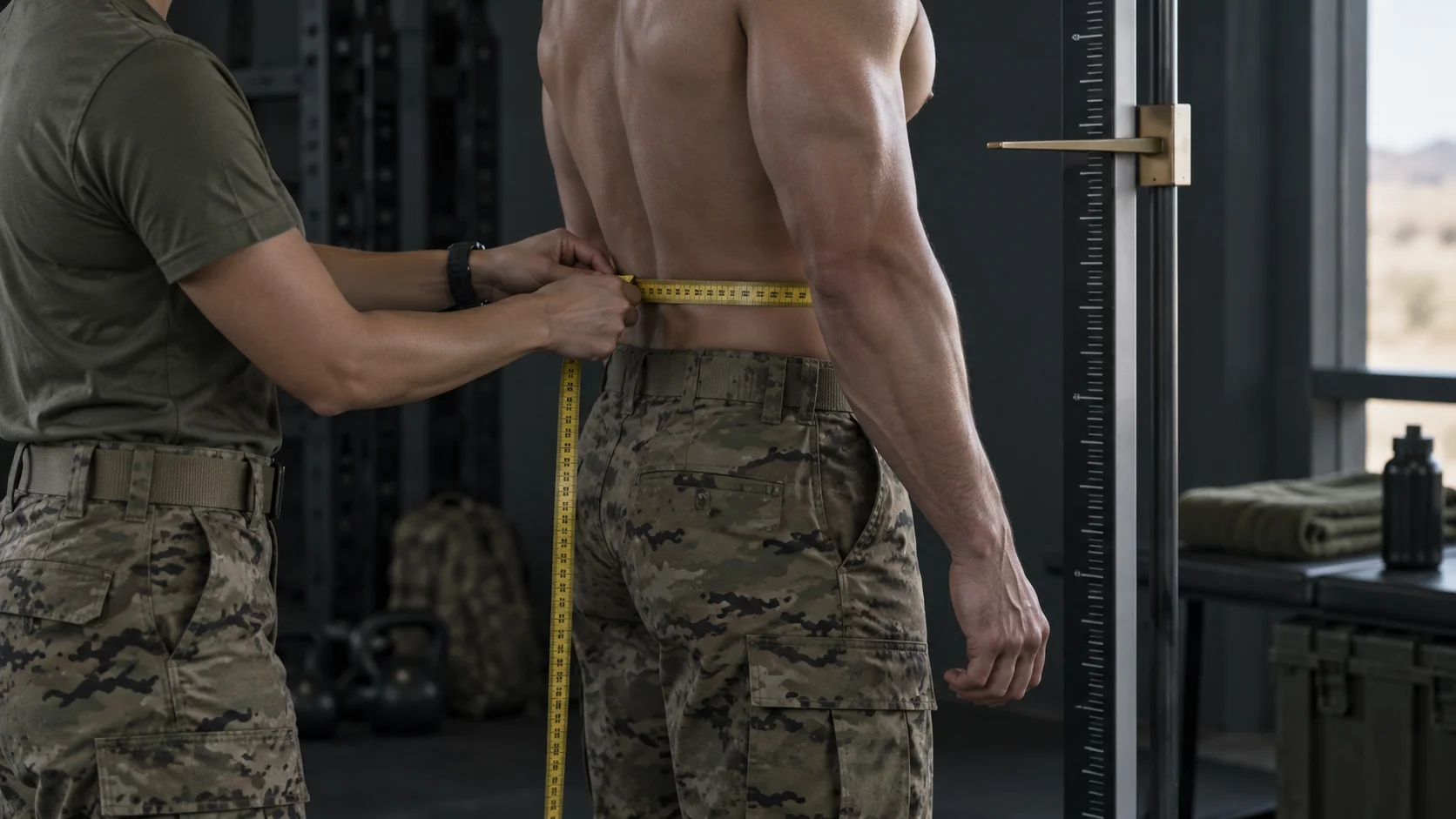
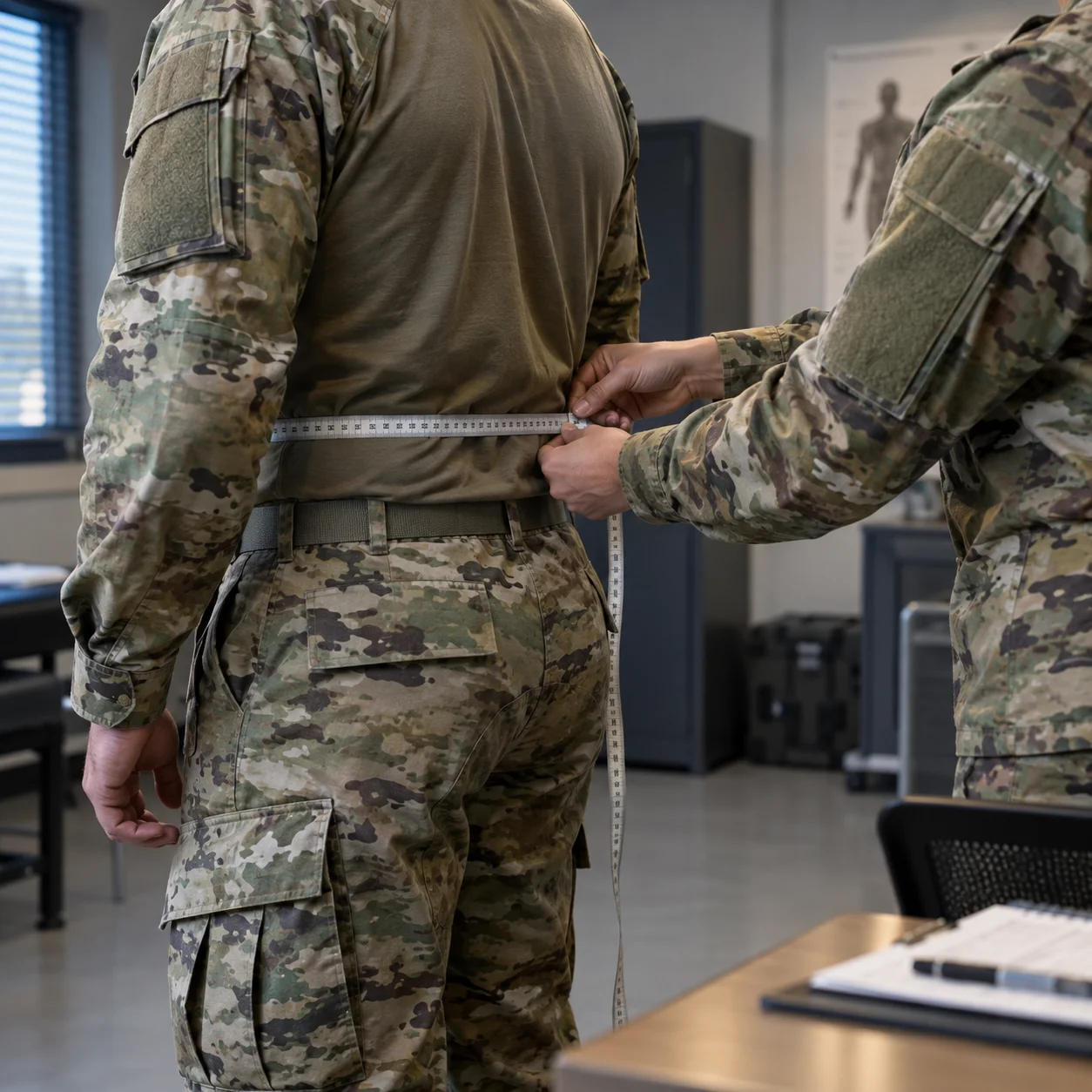
WHtR is now the Army's sole authorized body composition assessment. Instead of calculating a body-fat percentage from multiple circumference measurements or first comparing a Soldier against age- and sex-based height/weight tables, the current process uses two measurements: waist circumference at the navel and standing height. The waist measurement is divided by height to produce the Soldier's WHtR.
What Happened to the Old Army Tape Test?
The previous circumference-based tape test is no longer an authorized Army body-composition assessment. Under the former process, circumference measurements were used to estimate body-fat percentage, with different procedures and allowable body-fat limits based on sex and age. Army Directive 2026-13 rescinded those previous body-fat assessment methods.
That means terms such as "maximum body-fat percentage," "neck measurement," "hip measurement," and "tape-test body-fat percentage" describe the former system, not the standard used for current Army compliance in September 2026.
What Happened to the Height and Weight Tables?
The Army also eliminated the old height-and-weight screening tables as the gateway to body-composition assessment. Soldiers are now evaluated using WHtR directly. A Soldier does not first have to exceed a height/weight table before receiving the current body-composition assessment.
The same WHtR threshold applies across the force: the recorded ratio must be less than 0.550. There is no separate WHtR cutoff by age or sex.
High AFT Scores No Longer Create an Exemption
Army Directive 2026-13 also removed the previous fitness-score exemption from body-composition screening. A Soldier's AFT score does not exempt them from meeting the WHtR standard. The Army specifically states that Army Directive 2025-17, which had provided an AFT-related body-composition exemption, is rescinded.
DA Form 5500 Is Still Used, but for WHtR
The policy change did not eliminate DA Form 5500. Instead, the Army now records the WHtR assessment on DA Form 5500 and in the Army Training Information System (ATIS). The previous DA Form 5501 is no longer used.
Army guidance required Soldiers to have a WHtR screening recorded within 90 days of the directive's publication, establishing WHtR as the operational body-composition method across the force.
Why Did the Army Change the Method?
The Army describes the change as a faster, simpler body-composition assessment designed to improve consistency while keeping the focus on Soldier health and readiness. The Army also integrated WHtR entry into ATIS; by late July 2026, units had already recorded more than 45,000 assessments through the new workflow.
| Previous System | Current System, July 2026 Onward |
|---|---|
| Height/weight screening tables | No preliminary height/weight table |
| Circumference tape test | Waist-to-height ratio |
| Body-fat percentage estimate | WHtR value |
| Neck/waist or neck/waist/hip measurements | Waist at navel + height |
| Age- and sex-based body-fat limits | Single < 0.550 WHtR standard |
| DA Form 5500 / DA Form 5501 | DA Form 5500 |
| Possible AFT-score exemption | No AFT-score exemption |
How to Read the 0.550 Army WHtR Cutoff
The standard is strict: the recorded ratio must be less than 0.550. A displayed result of 0.550 does not pass. Use the same unit for both measurements; inches divided by inches and centimeters divided by centimeters produce the same ratio.
| Height | Waist | Raw calculation | Recorded WHtR | Result |
|---|---|---|---|---|
| 68 in | 37.3 in | 37.3 ÷ 68 = 0.5485… | 0.548 | Meets standard |
| 68 in | 37.4 in | 37.4 ÷ 68 = 0.550 | 0.550 | Does not meet |
| 70 in | 38.4 in | 38.4 ÷ 70 = 0.5485… | 0.548 | Meets standard |
| 70 in | 38.5 in | 38.5 ÷ 70 = 0.550 | 0.550 | Does not meet |
Boundary warning: do not round 0.5495 up to 0.550 or round 0.550 down. Current Army recording rules disregard digits after the third decimal place. This calculator performs that truncation automatically.
How an Official Army Measurement Differs From This Calculator
This tool calculates a ratio from numbers you enter. It cannot verify tape placement, posture, the measurement team, a confirmation measurement, or whether the value was recorded correctly in ATIS and on DA Form 5500. If an official initial result does not meet the standard, the confirmation process—not a self-measurement—controls the administrative result.
An official noncompliant result may lead to command action under the Army Body Composition Program. Exact counseling, enrollment and personnel consequences must be determined from the current directive, implementing guidance and the Soldier's official record.